Helping young children build early maths skills does not need to mean worksheets, pressure or formal lessons. For many 3 to 5 year olds, the best mathematics activities are simple games that involve moving, counting, sorting, spotting shapes and solving small problems during play.
At this age, children are still learning through hands-on experiences. They might count steps, compare big and small objects, sort toys by colour, build towers, copy patterns or take turns in a game. These everyday moments can all support early maths development in a natural and enjoyable way.
The UK Early Years Foundation Stage includes mathematics as one of the key areas of learning, and GOV.UK explains that young children are mostly taught through games and play. The Education Endowment Foundation also highlights the value of everyday routines, mathematical language, comparison, number and problem-solving in early maths learning.
This guide shares practical mathematics activities for 3 5 year olds, including ideas for home, indoor play centres, soft play environments and simple learning-themed events.
Why play helps children build early maths skills
Play gives children a reason to use maths without feeling like they are doing “maths work”. When a child builds a tower, shares toys, follows a route, counts jumps or sorts colours, they are practising early mathematical thinking.
Play-based maths can help children understand number and quantity, size and comparison, shapes and space, patterns and order, position and direction, problem-solving, turn-taking and sequencing.
For parents, this means early maths does not have to be complicated. A simple question like “How many steps did you climb?” or “Can you find something round?” can turn ordinary play into a learning moment.
The Education Endowment Foundation recommends building maths into everyday routines through counting, comparison and mathematical language.
What maths skills do 3 to 5 year olds learn through play?
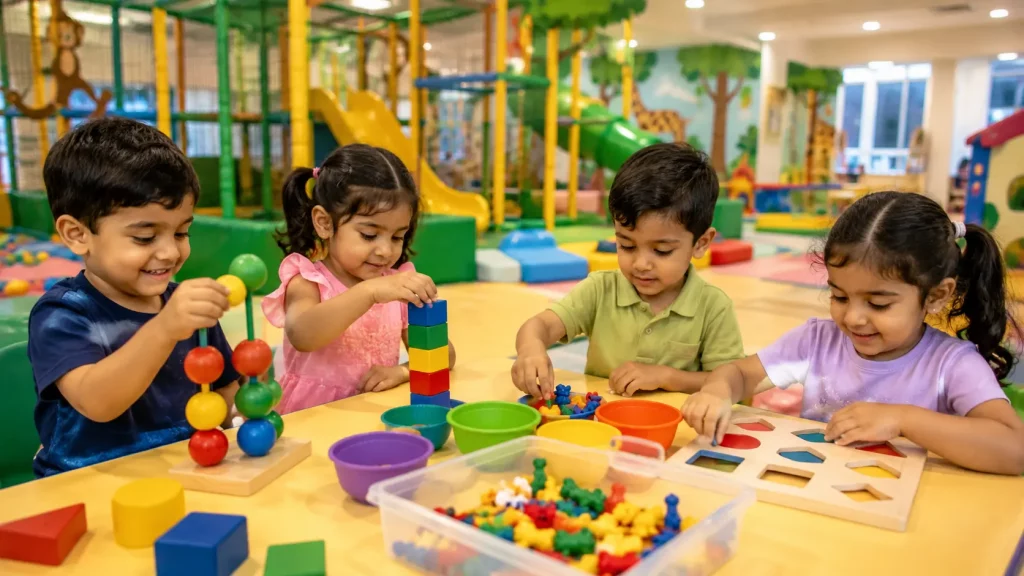
Children aged 3 to 5 are usually developing early maths skills in small, practical steps. They may not always explain what they are learning, but they often show it through movement and play.
- Counting: saying number names, counting objects or counting actions
- Matching: finding things that look the same
- Sorting: grouping by colour, size, shape or type
- Comparing: noticing more, fewer, bigger, smaller, taller or shorter
- Patterns: copying and continuing simple sequences
- Shapes: spotting circles, squares, triangles and rectangles
- Position: understanding under, over, beside, behind and between
- Problem-solving: working out how to build, move, share or complete a task
National Numeracy suggests activities such as playing with blocks, boxes and patterns to help young children think about size, colour, shape, weight and texture. NAEYC also notes that children develop ideas around measurement, comparison and spatial relationships as they explore and move through the world.
Mathematics activities for 3 to 5 year olds at home
1. Count everyday actions
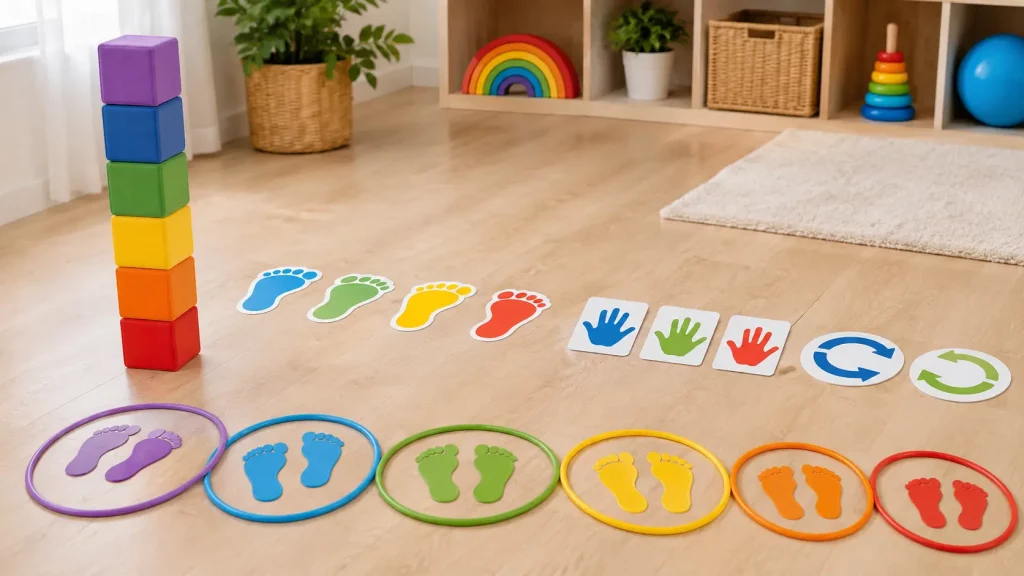
Ask your child to count simple actions during the day: 5 jumps, 3 claps, 4 steps, 2 spins or 6 blocks in a tower. This is one of the easiest counting games for children because it connects numbers to movement.
2. Sort toys by colour or size
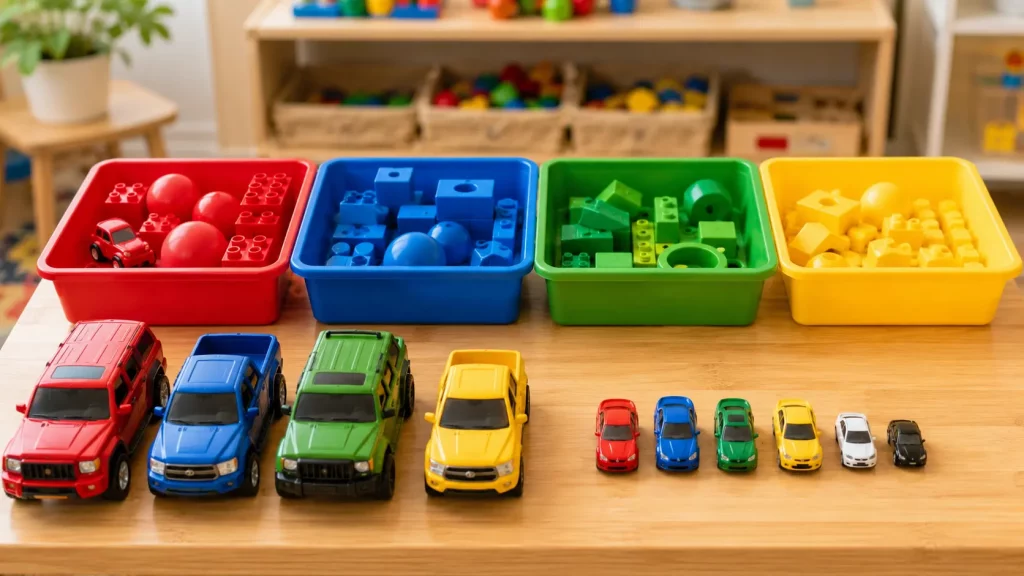
Give your child a small group of toys, blocks or craft items and ask them to sort them. For example, red toys in one pile, blue toys in another, big cars together and small cars together. Sorting helps children notice similarities and differences.
3. Make simple patterns
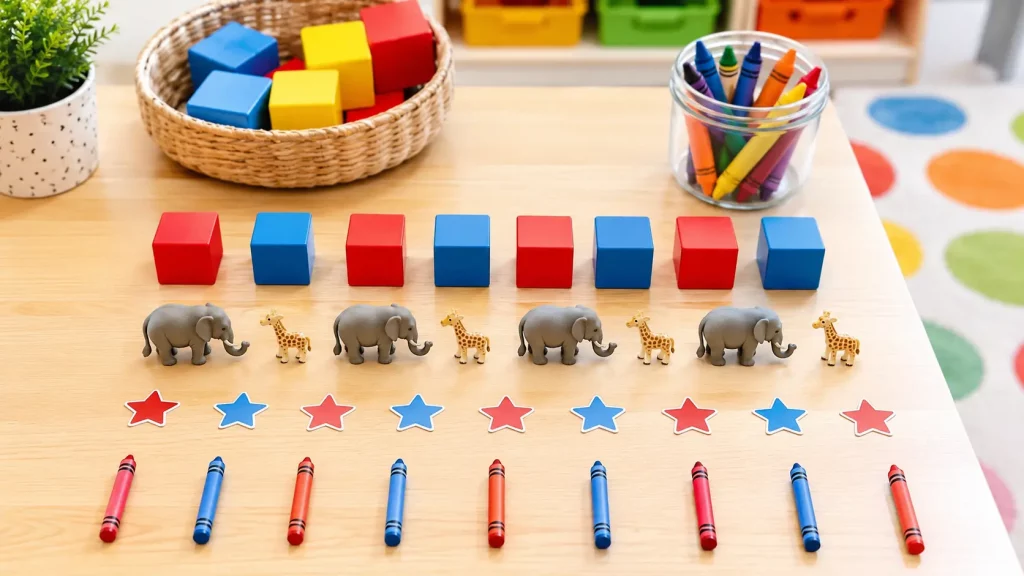
Use crayons, stickers, blocks or toy animals to make a pattern: red, blue, red, blue; big, small, big, small; or clap, jump, clap, jump. Then ask your child what comes next. Pattern games are useful math games to improve math skills because children learn order and prediction.
4. Build and compare towers
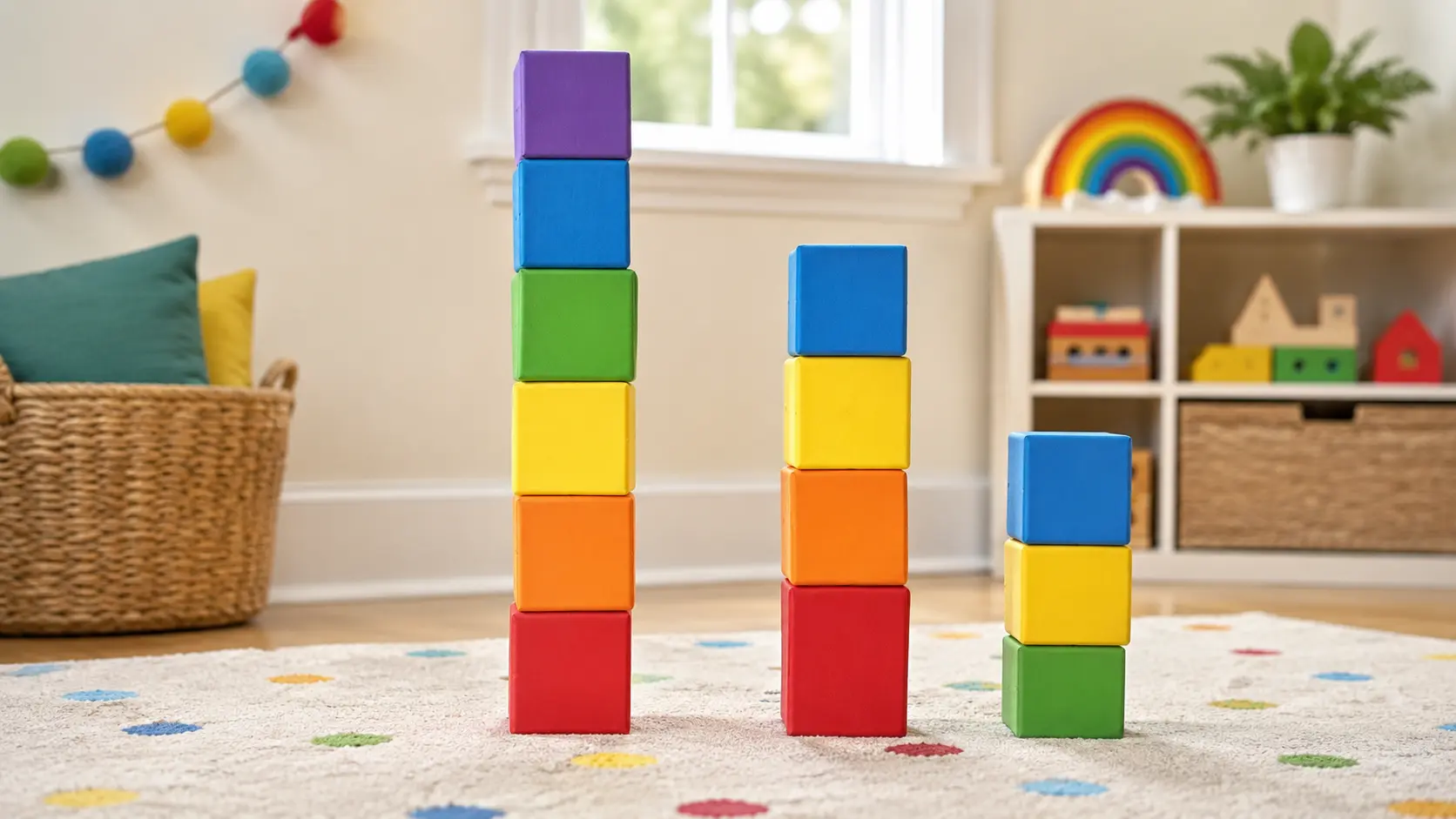
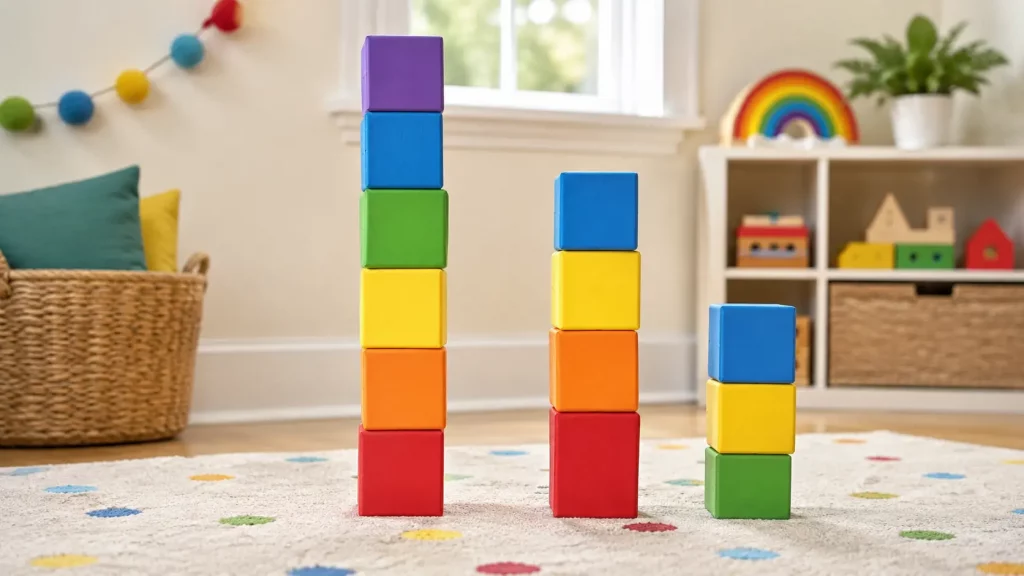
Use blocks, boxes or cushions to build towers. Ask: Which tower is taller? Which one is shorter? How many blocks did you use? What happens if we add one more? This supports counting, comparing and problem-solving.
5. Go on a shape hunt
A shape hunt is one of the simplest shape activities for preschoolers. Ask your child to find something round, something square, something shaped like a rectangle or something with a triangle.
Indoor play activities that support early maths learning
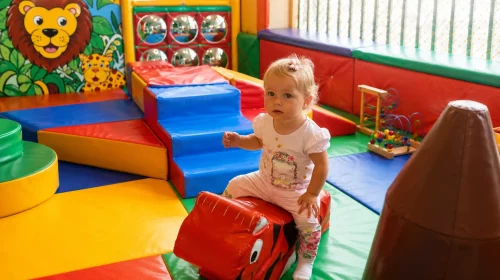
Indoor play centres and soft play spaces can be great places for active learning because children naturally move, count, compare and solve problems while they play. The key is to keep it light and playful, not to turn the visit into a lesson.
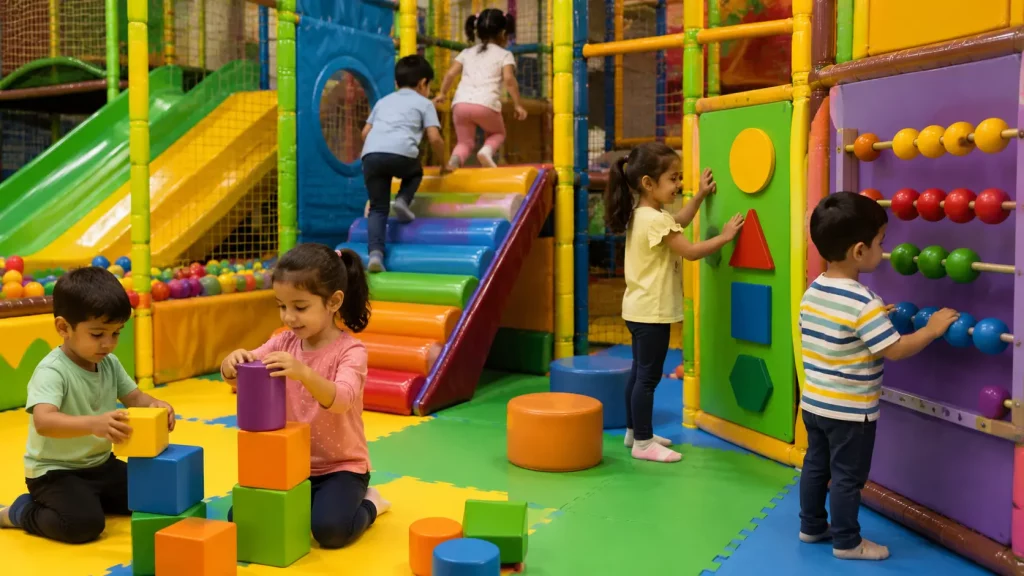
Counting games
During indoor play, parents can encourage simple counting without interrupting the fun. Try asking: How many steps did you climb? Can you slide three times? How many soft balls can you collect? Can you jump five times before we move on?
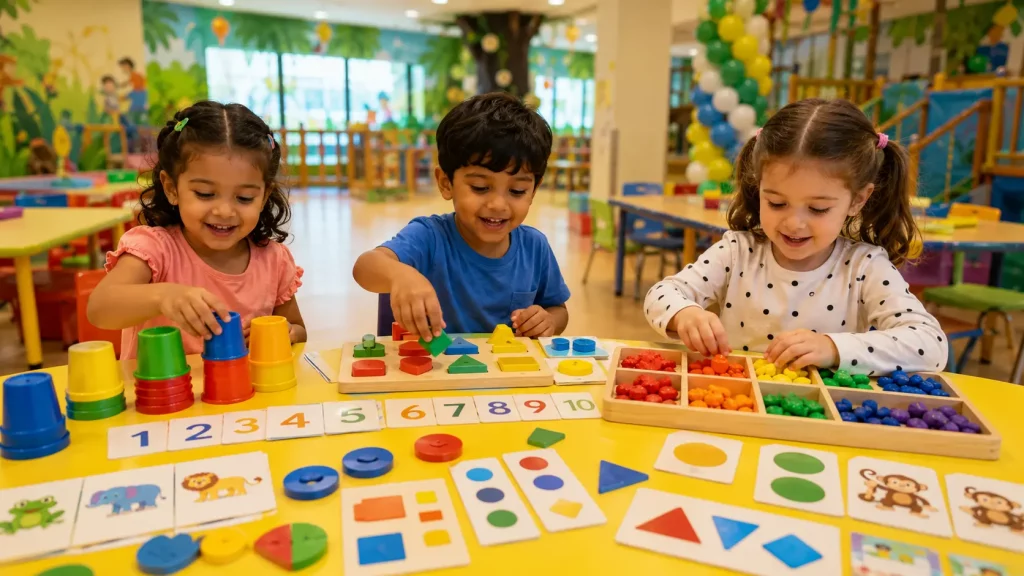
Shape and colour games
Indoor play areas often include bright colours, soft shapes, signs, mats, balls and activity areas. Turn this into a quick game by asking your child to find something blue, find a circle, touch something green, point to a rectangle or spot three different colours.
Sorting and matching games
If there are soft toys, balls, blocks or play items available, children can sort or match them. For example, they can put all yellow items together, match two objects of the same colour, find two things that are the same size or choose the biggest and smallest item.
Patterns and movement games
Movement patterns are easy and fun for young children. Try jump, clap, jump, clap; step, crawl, step, crawl; touch red, touch blue, touch red, touch blue; or run, stop, run, stop. This helps children understand sequence and repetition through their bodies.
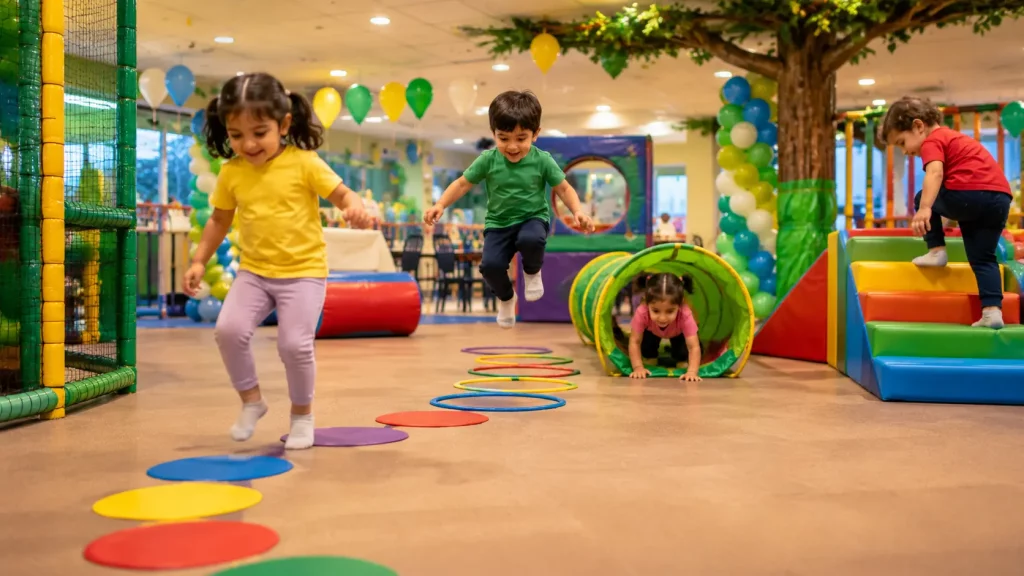
Obstacle course maths
An indoor playground naturally lends itself to obstacle games. Parents can create a simple number challenge: climb 3 steps, crawl through 1 tunnel, jump 4 times, slide down once and find 2 colours before finishing. This supports counting, memory, direction and sequencing.
Maths-themed events and workshops for young children
For 3 to 5 year olds, maths-themed events should feel like play, not school. A good session might mix movement, colour, counting, craft and group activities.
Explore Jungle Fun events
For more hands-on activities, creative sessions and family-friendly events, see what is coming up at Jungle Fun.

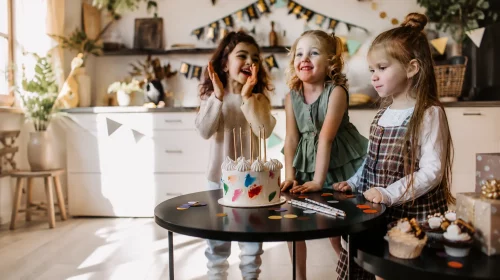
Jungle Fun’s Birthday Party
Family party fun with music, cake, play and celebration activities.
View Events →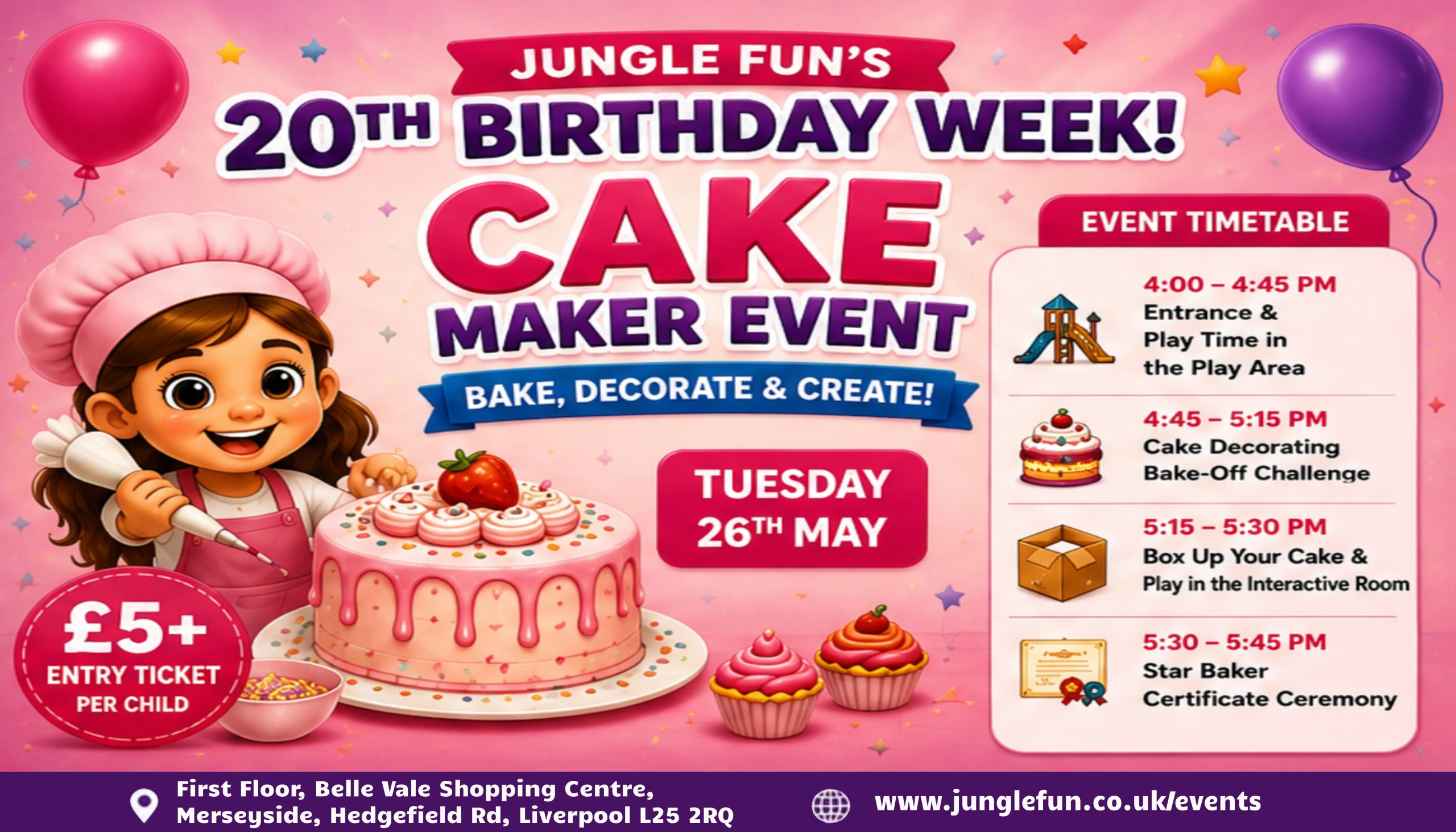
Cake Maker Event
A creative session where children can bake, decorate and enjoy.
View Events →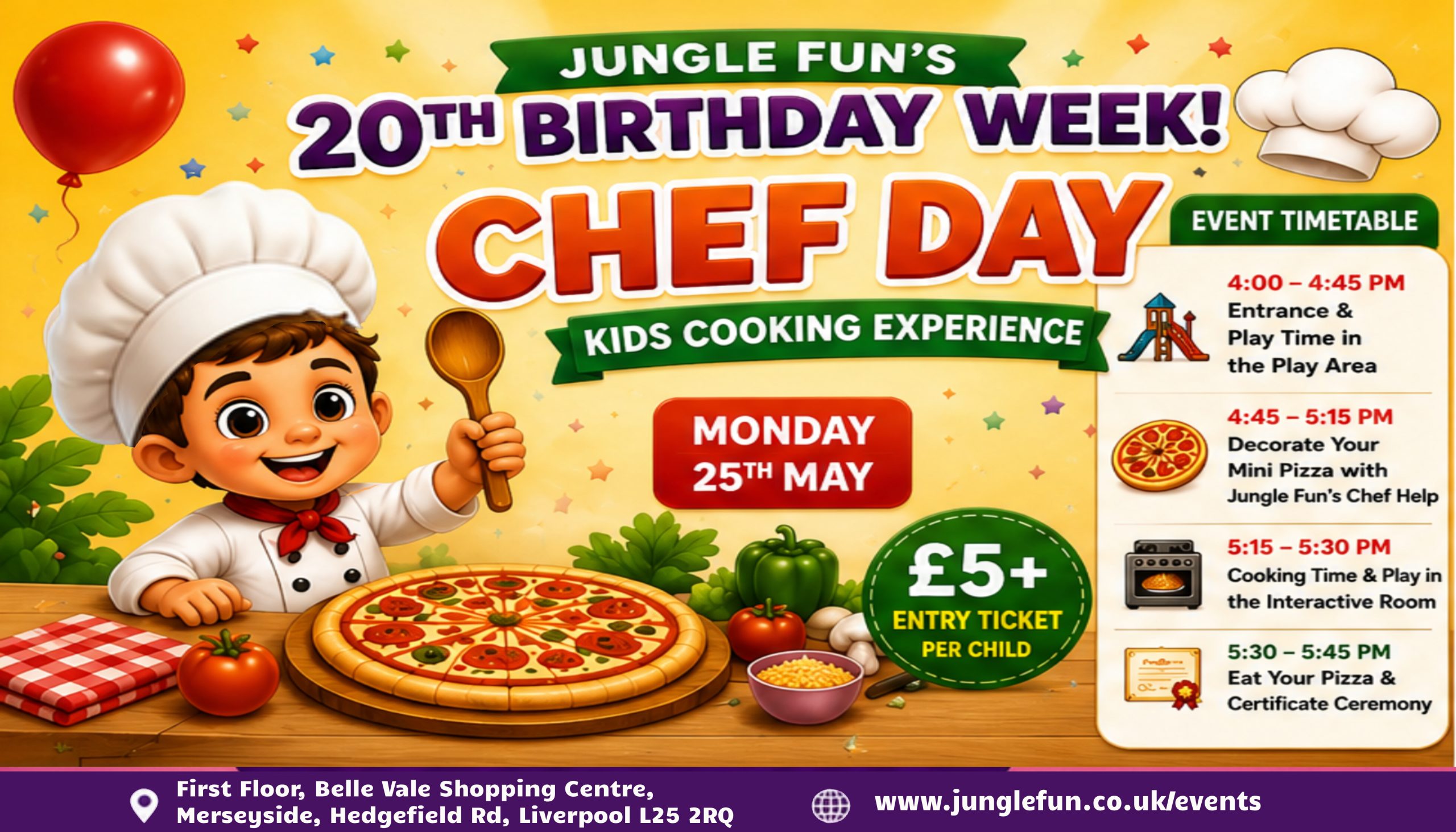
Chef Day Event
Food-themed fun with simple hands-on activities for young children.
View Events →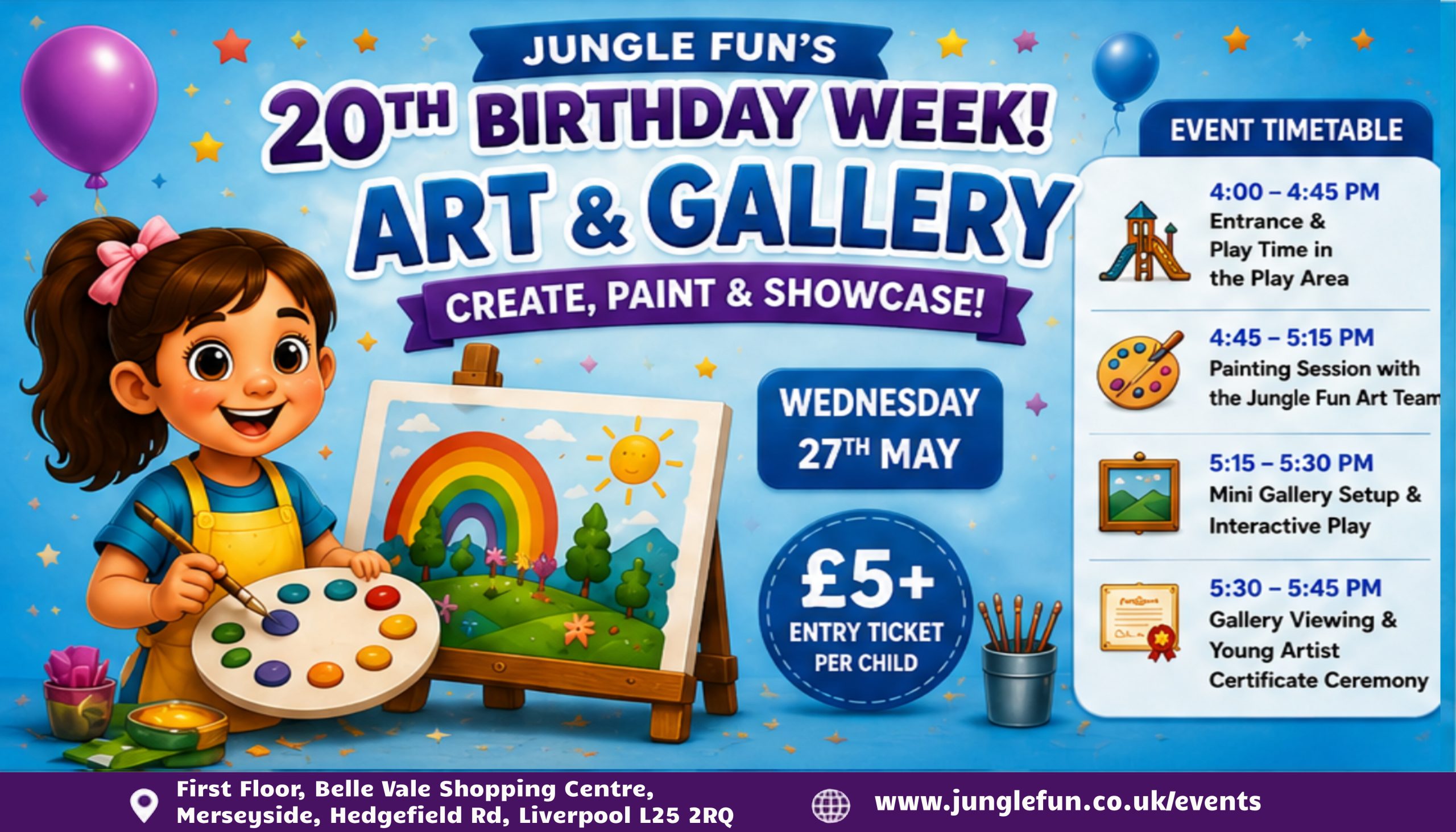
Art & Gallery Event
Creative play with colours, painting and child-friendly activities.
View Events →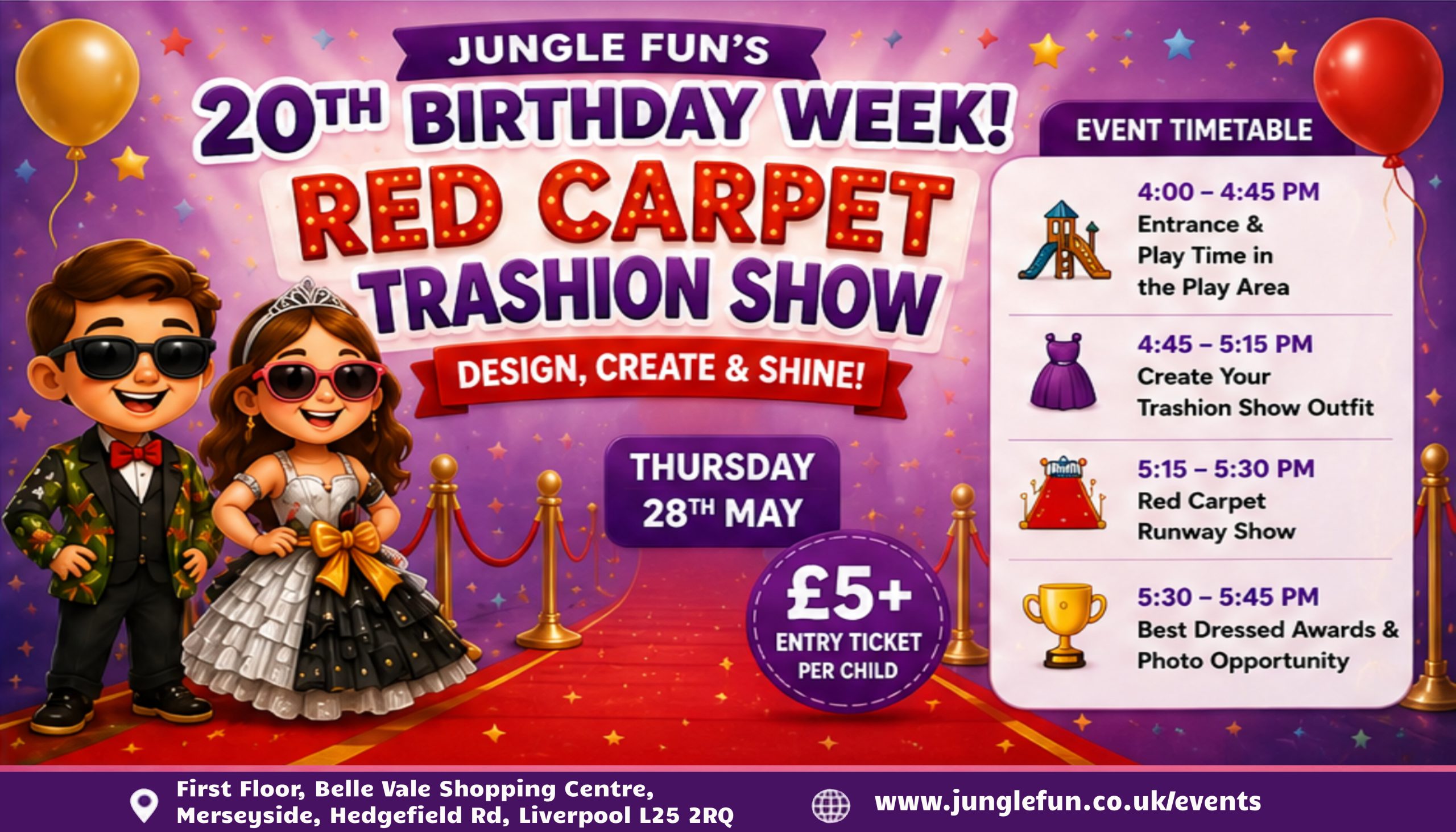
Red Carpet Fashion Show
A playful themed event for dressing up, creativity and confidence.
View Events →Number treasure hunt
Children search for number cards or objects around a safe indoor space. They might find 1 star, 2 balloons, 3 soft balls or 4 coloured shapes.
Shapes and sorting station
A small table can include shape cards, coloured objects, stickers or simple trays where children sort by colour, size or shape.
Build and count craft session
Children use blocks, paper shapes or craft materials to build something simple, then count the pieces they used.
Colour and pattern play
Children copy or create patterns using stickers, crayons, foam shapes or movement games.
Story and numbers session
A short story can include counting moments, sharing, matching or simple problem-solving. NRICH Early Years Foundation Stage activities are designed to support the early building blocks of mathematical thinking, reasoning and problem-solving.
What parents can try during a visit to an indoor play centre
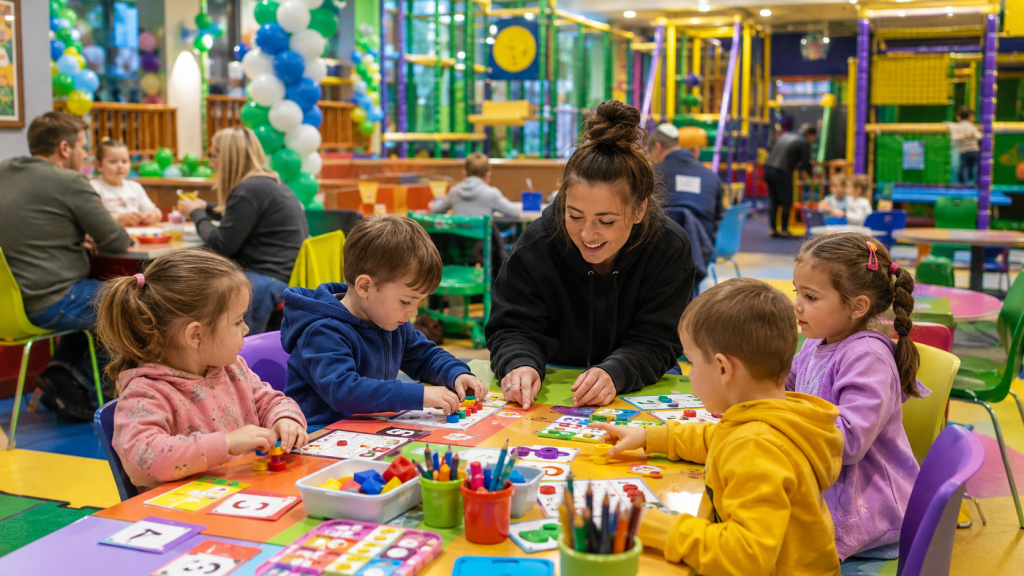
Parents do not need to prepare a full activity plan. A few small prompts are enough.
- How many steps are there?
- Can you find something round?
- Which slide is taller?
- Can you find two red things?
- Who is first, second and third?
- Can you make a pattern with your movements?
- Which way do we go next?
The most important thing is to follow the child’s interest. If they are excited about climbing, count climbs. If they love colours, sort colours. If they enjoy running and stopping, make a pattern game.
Learning through play at Jungle Fun in Liverpool
For families in Liverpool, indoor play can be a practical way to combine active play, social time and simple learning moments. At a place like Jungle Fun, children can move, explore, count, compare, climb, crawl, take turns and solve small problems while enjoying an indoor play environment.
Parents who want to plan a visit can use the Booking page to organise their session. If Jungle Fun is running themed activities or seasonal workshops, the Events page can be a helpful place to check what is coming up. Families can also look at the Café Menu if they want to make the visit easier with food and drinks before or after play.
Book your place for a fun experience with children
Ready to enjoy active play, simple learning moments and family time at Jungle Fun? Reserve your place online before your visit.
Book Your PlaceThis does not mean parents need to make every visit educational. Children often learn best when they are relaxed, curious and having fun. A few simple counting, sorting or shape questions can be enough.
Conclusion
The best mathematics activities for 3 5 year olds are simple, playful and connected to real experiences. Counting jumps, sorting colours, finding shapes, building towers, following obstacle courses and playing pattern games can all support early maths skills.
Home activities are useful, but indoor play can also give children opportunities to practise maths through movement, space, social play and problem-solving. Whether you are at home, visiting an indoor play centre or joining a themed event, the goal is the same: help children notice numbers, shapes, patterns and comparisons in a way that feels fun and natural.
For more seasonal family ideas, you can also explore our guide to summer holiday kids activities in Liverpool.
FAQ
What are good mathematics activities for 3 to 5 year olds?
Good mathematics activities for 3 to 5 year olds include counting games, sorting toys by colour or size, building towers, shape hunts, pattern games, simple board games, movement games and obstacle course challenges.
How can I improve my child’s maths skills through play?
You can improve your child’s maths skills by using numbers, shapes and comparisons during everyday play. Count steps, sort colours, compare sizes, make patterns and ask simple questions such as “How many?” or “Which one is bigger?”
What are some indoor maths games for preschoolers?
Indoor maths games for preschoolers include counting jumps, finding shapes around the room, sorting toys, matching colours, building block towers, making movement patterns and following simple number-based obstacle courses.
How does active play support early maths learning?
Active play supports early maths learning by helping children experience numbers, space, size, distance, order and direction through movement. For example, climbing steps, crawling through tunnels and taking turns can all involve counting and sequencing.
What activities can help with counting and shapes?
Counting actions, counting toys, number treasure hunts, shape hunts, block building, sticker sorting and colour matching can all help children practise counting and shape recognition.
Can indoor play centres help children learn?
Yes, indoor play centres can support learning when children are encouraged to count, compare, sort, take turns and solve simple problems during play. The learning should feel light, natural and fun, not like a formal lesson.
Are maths activities for 3 to 5 year olds supposed to feel like lessons?
No. For 3 to 5 year olds, maths activities work best when they feel like play. Counting jumps, sorting toys, building towers and finding shapes can all support early maths without pressure.
What maths skills should a 3 year old practise?
A 3 year old can practise simple counting, colour matching, shape spotting, sorting big and small objects, and using words such as more, less, bigger, smaller, under and over.
What maths skills should a 5 year old practise?
A 5 year old can practise counting objects, comparing groups, making patterns, recognising shapes, using position words and solving simple play-based problems such as building, matching and sequencing.
Can soft play help with maths skills?
Soft play can support early maths when children count steps, compare sizes, follow obstacle sequences, spot shapes, sort colours and use position words like over, under, through and next to.
How do I make maths fun for preschoolers?
Keep it short, playful and practical. Use toys, blocks, movement, songs, stories, shapes, colours and everyday questions instead of worksheets or formal tasks.
Sources and further reading
This article was informed by early years maths resources from GOV.UK Early Years Foundation Stage, the Education Endowment Foundation, National Numeracy, NAEYC and NRICH. These sources support the idea that young children develop early maths skills through play, everyday routines, counting, comparison, shapes, patterns, movement and problem-solving.